Fixed vs Floating Rates in Crypto Swaps: Which Should You Choose?
Understand the difference between fixed and floating exchange rates for cryptocurrency swaps and learn when to use each for optimal results.
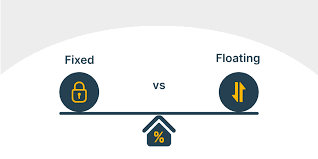
Understanding Exchange Rates in Crypto
When swapping cryptocurrencies, you'll typically encounter two types of exchange rates: fixed and floating (also called standard). Understanding the difference is crucial for optimizing your swaps and avoiding unexpected outcomes.
What is a Floating (Standard) Rate?
A floating rate, also known as a standard rate, adjusts dynamically based on current market conditions at the moment your swap is executed.
How Floating Rates Work
- Initial Quote: You receive an estimated rate when setting up the swap
- Market Adjustment: The rate adjusts as market prices change
- Final Execution: Your swap executes at the current market rate when processed
- Rate Variation: The final amount may differ slightly from the estimate
Floating Rate Example
Initial Quote: 1 BTC = 25.5 ETH (estimated)
10 minutes later: 1 BTC = 25.7 ETH (executed)
Result: You receive more ETH than initially quoted
However, it can work the other way:
Initial Quote: 1 BTC = 25.5 ETH (estimated)
10 minutes later: 1 BTC = 25.2 ETH (executed)
Result: You receive less ETH than initially quoted
What is a Fixed Rate?
A fixed rate locks in your exchange rate for a specified time window, typically 15-20 minutes, guaranteeing you receive exactly the quoted amount regardless of market movements.
How Fixed Rates Work
- Rate Lock: The exchange rate is locked for 15-20 minutes
- Countdown Timer: You must send funds within the time window
- Guaranteed Amount: You receive exactly the quoted amount
- Expiration: If you don't send within the window, the rate expires
Fixed Rate Example
Locked Rate: 1 BTC = 25.5 ETH (guaranteed)
15 minutes later: Market rate is 25.2 ETH
Result: You still receive 25.5 ETH (protected from decline)
But you also can't benefit from positive movements:
Locked Rate: 1 BTC = 25.5 ETH (guaranteed)
15 minutes later: Market rate is 25.8 ETH
Result: You only receive 25.5 ETH (missed the increase)
Key Differences
| Feature | Floating Rate | Fixed Rate |
|---|---|---|
| Rate Guarantee | No | Yes (15-20 min) |
| Price Protection | None | Protected from drops |
| Upside Potential | Unlimited | Capped at locked rate |
| Typical Fees | Lower | Slightly higher |
| Time Pressure | None | Must send quickly |
| Availability | All pairs | Limited pairs |
| Best For | Calm markets | Volatile markets |
When to Use Floating Rates
Ideal Scenarios
✅ Stable Market Conditions
- Low volatility periods
- Sideways trading
- Predictable price action
✅ Small Amounts
- Test swaps
- Minor transactions
- Learning swaps
✅ Non-Time-Sensitive
- Can monitor the swap
- Not urgent
- Flexible timing
✅ Cost Optimization
- Lower fees matter
- Maximum return desired
- Long-term holder
Advantages
Lower Fees: Typically 0.25-0.5% less than fixed rates
Potential Upside: Benefit from favorable price movements
No Time Pressure: Send funds at your own pace
Wider Availability: Works with all trading pairs
Disadvantages
Price Risk: Final amount may be less than estimated
Slippage: Large orders can move the market against you
Uncertainty: Don't know exact receipt amount until completion
When to Use Fixed Rates
Ideal Scenarios
✅ High Volatility
- Breaking news events
- Major price swings
- Uncertain markets
✅ Large Amounts
- Significant portfolio moves
- Business transactions
- Important swaps
✅ Budgeting Needs
- Need exact amounts
- Financial planning
- Meeting obligations
✅ Risk Aversion
- Can't afford price drops
- Peace of mind priority
- Professional use
Advantages
Price Certainty: Know exactly what you'll receive
Downside Protection: Safe from market drops during swap
Predictable Outcomes: Better for planning and budgeting
Professional Use: Ideal for business/commercial swaps
Disadvantages
Higher Fees: Typically 0.25-0.5% more expensive
Time Pressure: Must send within 15-20 minutes
Missed Opportunities: Can't benefit from favorable moves
Limited Availability: Not all pairs support fixed rates
Real-World Scenarios
Scenario 1: The Flash Crash
Situation: You want to swap 10 ETH to USDT. Suddenly, negative news breaks and ETH drops 8% in 5 minutes.
Floating Rate Outcome:
- Started: 10 ETH × $2000 = $20,000 USDT expected
- Executed: 10 ETH × $1840 = $18,400 USDT received
- Loss: $1,600 (8%)
Fixed Rate Outcome:
- Locked: 10 ETH × $2000 = $20,000 USDT guaranteed
- Received: $20,000 USDT
- Saved: $1,600
Winner: Fixed Rate
Scenario 2: The Pump
Situation: You're swapping 1 BTC to SOL. Positive Solana news causes SOL to pump 5% during your swap.
Floating Rate Outcome:
- Started: 1 BTC = 2000 SOL expected
- Executed: 1 BTC = 2100 SOL received
- Gain: 100 SOL (5%)
Fixed Rate Outcome:
- Locked: 1 BTC = 2000 SOL guaranteed
- Received: 2000 SOL
- Missed: 100 SOL gain
Winner: Floating Rate
Scenario 3: Business Payment
Situation: You need to pay a contractor exactly 5000 USDC and only have BTC. You can't afford to receive less.
Floating Rate Risk:
- Started: 0.15 BTC = 5000 USDC expected
- Executed: 0.15 BTC = 4850 USDC received
- Problem: $150 short of payment
Fixed Rate Certainty:
- Locked: 0.15 BTC = 5000 USDC guaranteed
- Received: 5000 USDC
- Result: Exact payment amount met
Winner: Fixed Rate
Advanced Strategies
Split Strategy
For large swaps, consider splitting between rate types:
Example: Swapping $50,000 worth
- 60% ($30k) with fixed rate = Safety
- 40% ($20k) with floating rate = Opportunity
This provides downside protection while maintaining upside potential.
Market Timing
Use Floating When:
- Volume Weighted Average Price (VWAP) is stable
- 24h volatility is below 2%
- Major support levels are holding
- No significant news expected
Use Fixed When:
- Major announcements pending
- Key resistance/support levels nearby
- 24h volatility above 5%
- Large order books imbalances visible
Fee Optimization
Calculate the break-even volatility:
Fixed Rate Fee Premium: 0.5%
Use Fixed if expected volatility > 0.5%
Use Floating if expected volatility < 0.5%
Pouch Swap Rate Options
Floating Rate Features
- Real-time market rates
- No time limits
- All 2000+ token pairs
- Lowest fees
- Best for most swaps
Fixed Rate Features
- 15-minute rate lock
- Price guarantee
- Available on major pairs
- Slightly higher fee
- Peace of mind
How to Choose on Pouch Swap
- Start your swap normally
- Check if fixed rate is available for your pair
- Compare rates and fees
- Select your preferred option
- Complete the swap
Common Mistakes
❌ Always Using Fixed Rates
Don't default to fixed rates for every swap. The premium adds up over time, especially in stable markets.
❌ Fixed Rates for Small Amounts
The fee difference might be $5-10 for a $1000 swap. Not worth the complexity for small amounts.
❌ Floating Rates During High Volatility
Don't use floating rates right after major news or during extreme market moves.
❌ Missing Fixed Rate Deadlines
If you lock a fixed rate, send immediately. Don't wait until the last minute.
❌ Ignoring Fees
Always calculate total costs. Sometimes a "better" rate has higher fees that negate the advantage.
FAQ
Can I change from floating to fixed after starting?
No. You must choose before confirming the swap. Once initiated, the rate type is locked.
What happens if I miss the fixed rate deadline?
The rate expires and your swap is canceled. You'll need to start over with a new quote.
Are fixed rates available for all trading pairs?
No. Fixed rates require sufficient liquidity and are typically available for major pairs only.
Which is more popular?
About 80% of users choose floating rates due to lower fees and no time pressure.
Quick Decision Guide
Choose Floating Rate if:
- Market is stable (< 2% daily volatility)
- Swap amount is small (< $5,000)
- You're not in a hurry
- Every penny of fees matters
Choose Fixed Rate if:
- Market is volatile (> 5% daily volatility)
- Swap amount is large (> $10,000)
- You need exact amounts
- Peace of mind is worth the premium
Conclusion
There's no universally "better" option - it depends on market conditions, swap size, and your risk tolerance. Most users default to floating rates for everyday swaps and reserve fixed rates for volatile markets or large, important transactions.
The key is understanding both options and choosing appropriately based on the situation. With practice, you'll develop intuition for which rate type serves you best.
Ready to swap? Try Pouch Swap with both fixed and floating rate options for 2000+ cryptocurrencies.
Questions about rates? Ask our community in Telegram.
Share this article: